

BS in Biomedical Technologies
The Department of Biomedical Technologies is at the forefront of healthcare innovation, offering a transformative educational experience. Our programs fuse cutting-edge research with practical application, empowering students to become skilled problem-solvers and future leaders in the field. Through rigorous coursework, hands-on projects, and interdisciplinary collaboration, we cultivate a deep understanding of biomedical technologies and their real-world impact.
Our department boasts a world-class faculty with extensive industry experience and a strong track record of research. Experts in a diverse range of fields including bioengineering, medical imaging, nanotechnology and artificial intelligence bring a wealth of knowledge and experience to the classroom, guiding students into exploring the intersection of biology, medicine, and technology.
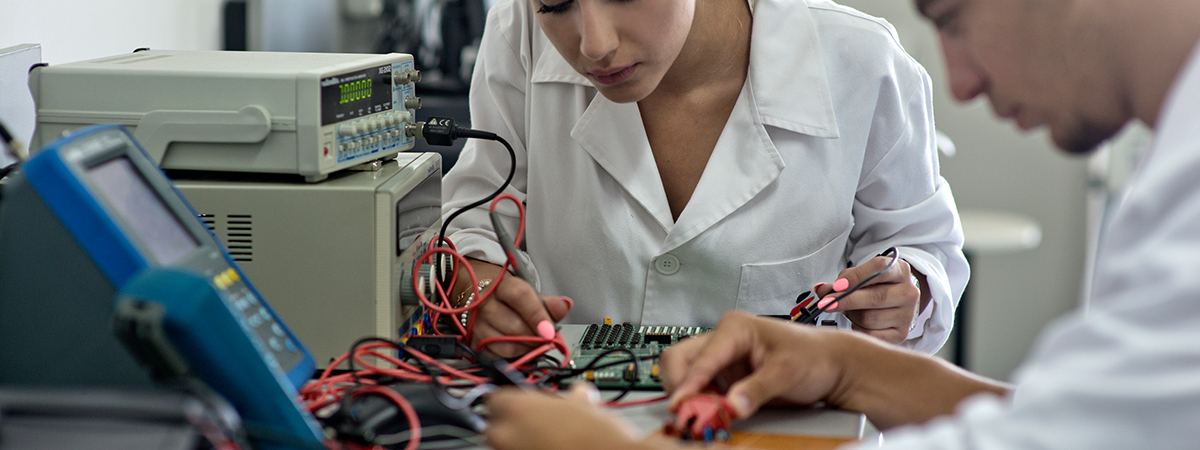
In our laboratory, students are equipped with the skills and knowledge required to make a real impact in the field. They engage in hands-on learning experiences and conduct groundbreaking research by developing novel medical devices.
The department fosters strong partnerships with industry leaders, healthcare institutions, and research organizations. It is committed to pushing the boundaries of scientific discovery and translating research into practical solutions.
Our graduates are highly sought after by top healthcare companies, research institutions, and startups. They excel in roles ranging from biomedical technologies and data analytics to medical device development and healthcare administration.
The Bachelor of Science degree in Biomedical Technologies aims to achieve:
- Educational excellence by
- Providing a comprehensive and up-to-date curriculum that covers fundamental principles and advanced concepts in biomedical technologies
- Fostering critical thinking, problem-solving skills, and hands-on experience through laboratory work, projects, and internships
- Ensuring students acquire a solid understanding of key technologies, tools, and methodologies relevant to biomedical engineering and technologies
- Developing proficiency in using software, equipment, and instrumentation commonly employed in the biomedical field
- Interdisciplinary knowledge by emphasizing interdisciplinary learning by integrating concepts from biology, medicine, engineering, and computer science to solve complex problems in healthcare.
- Research and innovation by cultivating research skills and providing opportunities for students to engage in research projects that contribute to advancements in biomedical technologies.
- Ethical and professional conduct by
- Emphasizing the importance of integrity, confidentiality, and responsible conduct in research and practice
- Providing guidance on professional development, communication skills, and teamwork to prepare students for successful careers
Upon completion of the program, students will be able to:
- Demonstrate competence in using advanced instrumentation, software, and laboratory techniques commonly employed in biomedical research and industry.
- Synthesize knowledge from various disciplines, including biology, engineering, and computer science, to solve complex problems in biomedical technologies.
- Plan, execute, and communicate the results of independent research projects that contribute to the advancement of biomedical knowledge.
- Apply engineering design principles to create innovative solutions for healthcare challenges, considering safety, efficacy, and ethical concerns.
- Navigate the regulatory landscape of biomedical technologies, ensuring compliance with ethical standards, safety regulations, and industry best practices.
- Translate complex technical concepts in written reports and oral presentations for both technical and non-technical audiences.
- Understand and apply quality management principles, enabling them to ensure the safety, efficacy, and reliability of biomedical products and processes.
Program requirements
Collaboration with Germany
The Department of Biomedical Technologies boasts strong academic and research collaborations with several leading German universities. These partnerships facilitate student and faculty exchange, joint research projects, and the sharing of cutting-edge knowledge and technologies. By fostering these international partnerships, we enrich our curriculum and prepare our graduates to excel in a globalized healthcare landscape. Our students will have the unique opportunity to learn from world-renowned experts in the field, gain international experience and contribute to global advancements in biomedical engineering.
Career Opportunities
A BS in Biomedical Technologies provides various career opportunities across the healthcare, research, and technology sectors. Graduates are equipped with a diverse skill set that combines knowledge of biology, engineering, and computer science, making them suited for roles in the development, application and maintenance of biomedical technologies and devices. Here are some potential career paths:
- Biomedical scientist
- Biomedical data analyst
- Biomedical engineer
- Medical imaging specialist
- Healthcare IT specialist
- Biotechnology researcher
- Quality assurance engineer
- Biomedical product manager
- Healthcare consultant
- Biomedical entrepreneur
- Biomedical technician
Program Details
- Degree Type
- Bachelor
- Duration
- 3 years
- Total Credits
- 180
- Language
- English
From Our Alumni